
Digital X-rays in Lakeland, Florida
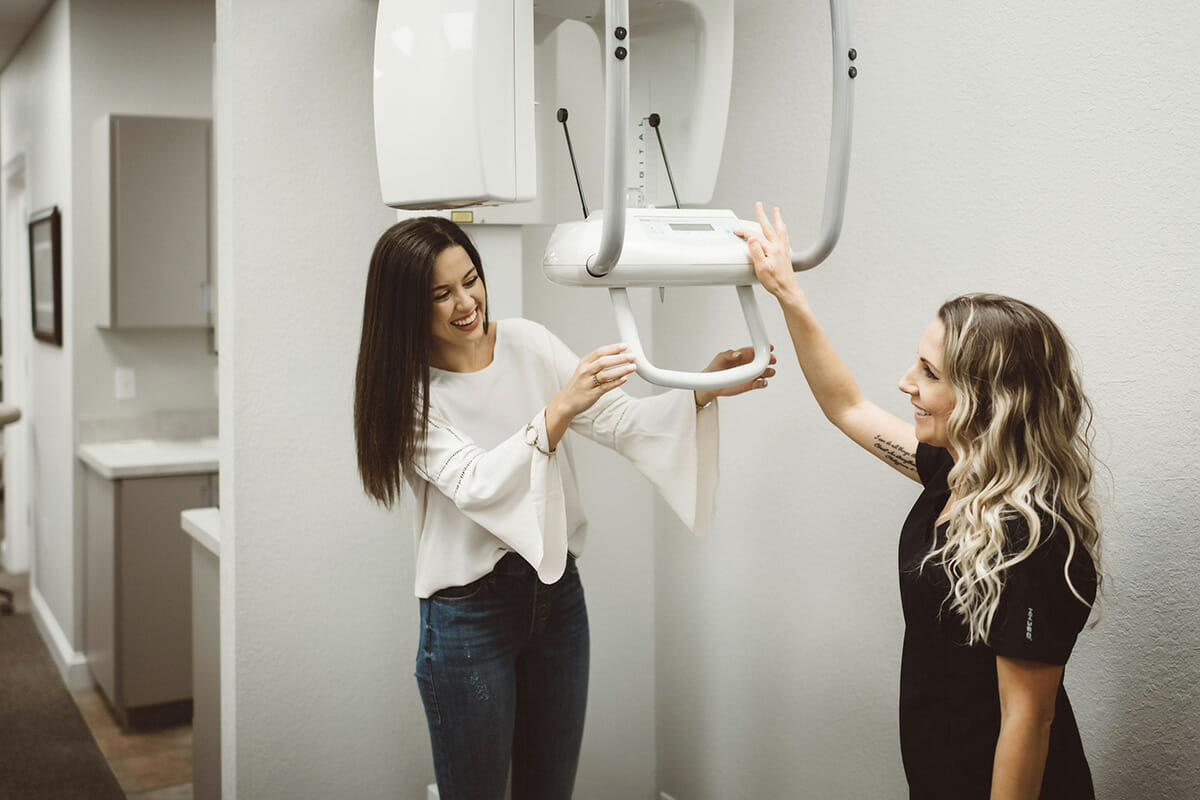 Accurate diagnosis is one of the most important parts of modern dentistry. Many dental concerns, such as tooth decay, gum disease, or bone loss, may not be visible during a routine exam alone. Digital X-rays allow a dentist to see what is happening beneath the surface, helping detect problems early and support better long-term oral health.
At Crosby Dentistry in Lakeland, Florida, we care about your overall health and well-being. To provide the best care for our patients, we use diagnostic testing to make accurate diagnoses and monitor how the mouth, jaw, and teeth change and move over time. Our team uses digital X-rays to get a better look at what is happening inside the body. With digital X-rays, your results are available quickly with high-quality images that are easy to share and store.
What Is an X-Ray?
An X-ray is a diagnostic tool used by doctors and dentists alike. An X-ray uses different energy wavelengths to penetrate the body’s soft tissues, stopping when they reach a hard object, like a bone or a tooth. The wave is then bounced back to an imaging device and the inverse image appears. X-rays are a fast and valuable tool that allows dentists to get an inside view of your body. By looking at bones and teeth through an X-ray, dentists can provide better overall health care.
Why Are X-rays Needed?
X-rays are needed to help give our team a complete view of what is happening under your skin and tissue. Not only are X-rays informative for diagnosis, but they are also helpful in creating a baseline image of your mouth, teeth, and gums. X-rays are commonplace and are taken every few years so that we can monitor how your bones are growing and developing or how your teeth may be shifting and moving over time.
Dr. Brian Crosby may also take a specific X-ray to determine the placement, development, or growth of a particular tooth or bone. X-rays can help detect tooth decay, cavities, cysts, and abnormalities that may not be visible to the naked eye. They are also useful for evaluating wisdom teeth, dental implants, and the health of the jawbone.
What Are the Benefits of Digital X-rays?
Traditionally, X-rays were only taken using an antiquated film. Many chemicals and reagents were required to develop the film, making the process complicated and time-consuming. X-rays were also bulky and hard to transport from one place to another. Thankfully, new technology has made digital X-rays common in medical and dental offices worldwide.
Digital X-rays have several benefits, including:
- Faster processing time
- Easy storage and transport
- Improved image quality
- Quick image sharing
- Easier developing process
With digital X-rays, our team can see and interpret your results almost instantly with accurate imaging and easy storage. Faster results mean you get the diagnosis and treatment you need quickly.
Are X-Rays Safe?
Many patients are concerned about radiation exposure when undergoing an X-ray, and for a good reason. In high doses, radiation can be extremely dangerous. However, digital X-rays use low levels of radiation, making them a safe and effective diagnostic tool.
The American Dental Association supports the use of dental radiographs when they are necessary for diagnosis and treatment planning. Digital imaging reduces radiation exposure compared to traditional film X-rays, helping limit unnecessary radiation exposure while still providing clear images.
We like to take new digital X-rays about once per year at our dental office, unless additional imaging is needed. The process is quick, comfortable, and requires no special preparation. Protective measures, such as a lead apron, may be used to further reduce exposure.
Types of Dental X-Rays in Lakeland, Florida
There are several types of dental radiographs used in dentistry, depending on the area of interest:
- Bitewing X-rays show the upper and lower teeth and help detect cavities
- Periapical X-rays focus on a single tooth and its root structure
- Panoramic X-rays capture the entire mouth, including the jawbone and sinuses
- Cone beam CT (CBCT) provides detailed 3D imaging using cone beam technology
CBCT and tomography imaging are often used for advanced cases, such as planning dental implants or evaluating complex abnormalities.
What to Expect During Your Appointment
Digital X-rays are a simple and comfortable part of your dental visit. A dental hygienist will position a small sensor inside your mouth to capture images of your teeth. You may be asked to bite down on a bite blocker to keep the sensor in place.
The process takes only a few minutes and produces a clear image almost instantly. Your dentist will review the images with you and explain any findings as part of your dental care and treatment planning.
How Digital Imaging Supports Dental Treatment
Digital X-rays are an essential diagnostic tool that supports a wide range of dental treatments. They help guide procedures such as:
- Dental implants
- Root canals
- Extractions
- Orthodontic treatment like braces
- Evaluation of dentures and crowns
By providing a detailed view of the teeth and jawbone, digital imaging helps ensure that treatments are accurate and tailored to your individual needs.
Digital X-Rays and Preventive Dental Care
Routine digital X-rays are an important part of preventive dental care. They allow your dentist to monitor changes in your mouth over time and detect early signs of dental disease before symptoms appear.
This proactive approach helps protect your current oral health and supports long-term wellness. Regular imaging, combined with cleanings and exams, helps maintain healthy teeth and gums.
Frequently Asked Questions
How often should dental X-rays be taken for different patients?
The frequency of dental X-rays depends on your individual oral health, risk for cavities, and history of dental problems. Patients with healthy teeth may only need X-rays once a year, while those with gum disease, frequent tooth decay, or ongoing treatment may need them more often. Your dentist will recommend a schedule based on your specific needs.
Are digital X-rays safe for long-term use?
Digital X-rays use very low levels of radiation and are considered safe for routine dental care. Modern technology reduces radiation exposure compared to traditional film X-rays. Protective measures, such as lead aprons, may also be used. Many patients receive dental X-rays regularly without issues, but frequency is always based on individual health needs.
What types of dental problems can X-rays detect early?
Digital X-rays can detect many issues before they become visible or painful. These include tooth decay between teeth, bone loss from gum disease, cysts, abscesses, and abnormalities in the jawbone. Early detection allows for simpler treatment and helps prevent more advanced oral health problems from developing.
When are more advanced imaging options like CBCT needed?
Cone beam CT (CBCT) imaging may be recommended for more complex cases. This includes planning dental implants, evaluating impacted wisdom teeth, or assessing bone structure in detail. Not every patient needs this type of imaging, but it can provide a more complete view when standard X-rays are not enough.
Can digital X-rays help prevent future dental problems?
Yes, digital X-rays are an important part of preventive dental care. By identifying early signs of tooth decay, gum disease, or bone loss, your dentist can treat issues before they worsen. This proactive approach helps protect your oral health and may reduce the need for more extensive procedures later.
Schedule Your Appointment in Lakeland, Florida, Today
Digital X-rays are an important part of maintaining your oral health and catching potential problems early. Our team is here to provide safe, efficient imaging as part of your complete dental care.
Call Crosby Dentistry today at 863-683-8127 to schedule an appointment in Lakeland, Florida, and learn more about how digital X-rays support your dental health.